All case studies

Medical Device · Reimagining Device Training

Embedding Digital Product Twins Across the Surgical Education Continuum

How a leading medical technology company used a digital twin of an intraoperative planning tool to build surgeon confidence before the operating room.

Summary

Monarch Learning Labs built a digital twin of an intraoperative planning tool so surgeons and clinical teams could practise the real interface and workflows in a browser, without a physical system in the room. In the operating room, trust is built through repetition — but access to that repetition is limited by travel, equipment availability, and scheduling. The digital twin removed that constraint. Embedded across a medical technology company’s learning curriculum, it supported foundational understanding for residents and more nuanced case discussions for experienced surgeons. Learners could see how planning decisions such as alignment, positioning, and balance translate into intraoperative outcomes, then repeat that exploration on demand. Access extended past the primary operator to clinical and OR teams, improving shared understanding across roles. The result was earlier confidence, a shorter learning curve, standardized training across geographies, and reusable educational content captured from faculty-led sessions.

Client: A leading medical technology company

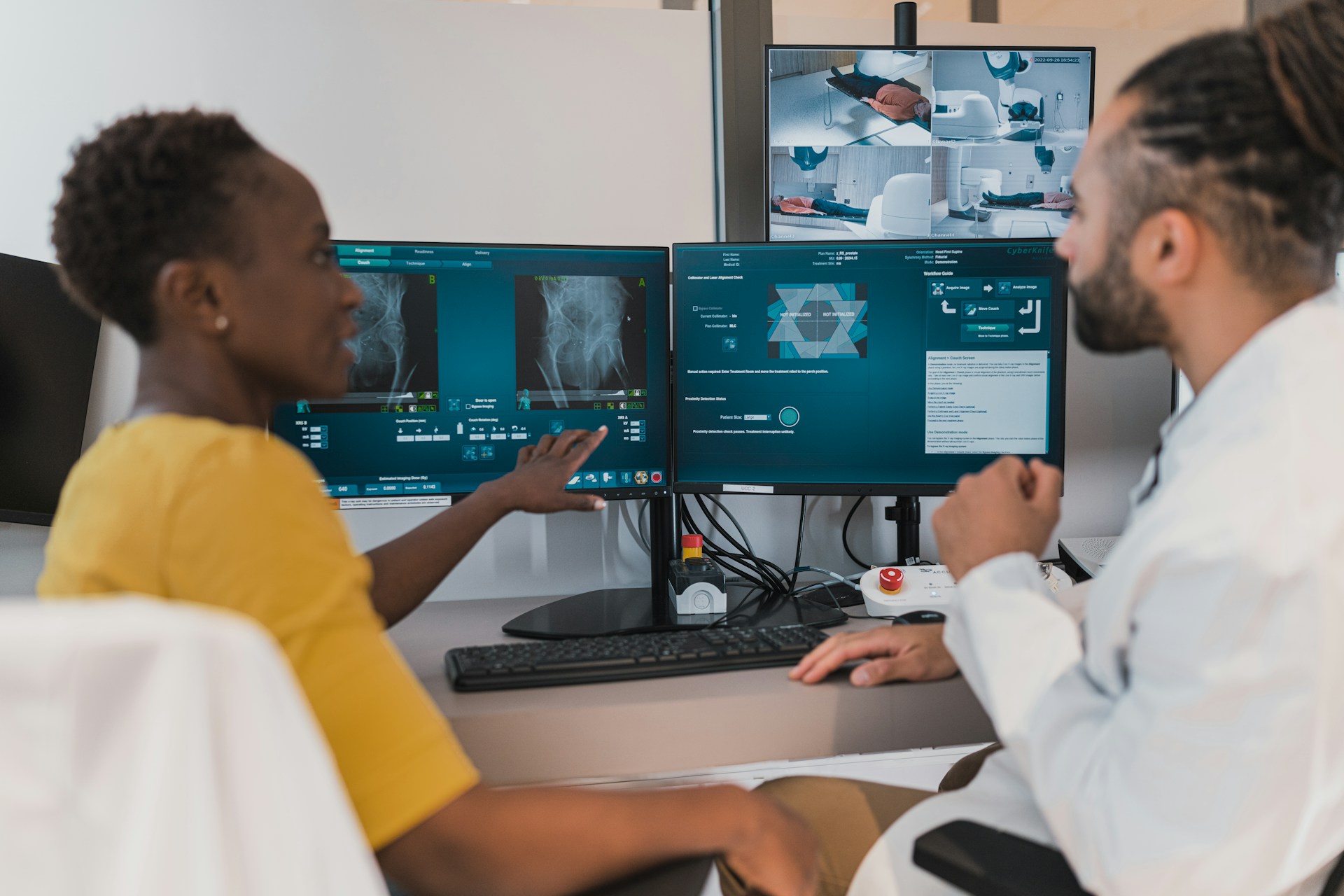
Clinical team reviewing device workflows across multiple screens

The Challenge

Medical device organizations face increasing pressure to deliver consistent, high-quality education across a diverse learner base while navigating constraints related to access, logistics, and variability in training environments. Traditional models rely on in-person sessions and physical systems, limiting scalability and flexibility, while surgeons require a more experiential understanding of system workflows and decision-making early in the learning curve.

In the operating room, trust is built through repetition, but access to that repetition is inherently limited, creating barriers to confidence and adoption.

A Curriculum-Wide Approach

Monarch Learning Labs developed a digital twin of an intraoperative planning tool, enabling surgeons and clinical teams to interact with the same interface and workflows in a browser-based environment. By extending access beyond the physical system, users could build familiarity through repetition before entering the operating room.

Embedded across the learning curriculum, the platform supported both foundational understanding and advanced case discussions, reinforcing that value comes from enabling meaningful, repeatable learning, not just the technology itself.

Visualization That Accelerates Understanding

Dynamic visualization proved to be a critical differentiator, allowing learners to explore how planning decisions — such as alignment, positioning, and balance — translate into intraoperative outcomes. This strengthened foundational understanding for residents and enabled more nuanced case discussions for experienced surgeons.

Combined with repeatable interaction, it helped shorten the learning curve and build confidence earlier in adoption. In practice, this led to more prepared conversations in the operating room and greater familiarity with system workflows at the point of use.

Flexibility Without Compromise

The platform introduced a new level of accessibility by removing dependence on physical systems. Surgeons and sales teams could engage with real planning workflows without traveling or waiting for access to a robotic unit. This enabled more frequent, on-demand interaction, supporting repetition and familiarity.

Access extended beyond the primary operator to clinical teams and OR teams, improving alignment and shared understanding. As familiarity increased across roles, confidence improved, helping reduce variability and support smoother procedural adoption.

Scalable Impact Today, Structured Growth Ahead

By creating a digital twin of an intraoperative planning tool, the organization established a more accessible and scalable foundation for modern medical education. Reducing reliance on physical systems enabled earlier and more frequent interaction, helping users build familiarity through repetition before entering the operating room.

The approach also unlocked efficiencies in content development, with faculty-led sessions captured and reused to create standardized, high-value educational assets.

The organization recognizes that sustained gains in advanced proficiency will require additional structure. The next phase focuses on developing more formalized learning scenarios, assessment frameworks, and feedback mechanisms to support deeper skill development.

What made the difference

One platform, every stage of learning

Supports residents through experienced surgeons within a single curriculum.

See the impact before the OR

Visualizes how planning decisions translate into intraoperative outcomes.

Education without boundaries

Flexible, on-demand training with no dependence on physical systems or travel.

Expert insights, shared easily

Faculty-led sessions captured and reused as standardized educational assets.

Want the full story?

Download the medical device case study, or talk to us about what practice could look like for your team.

Published by Monarch Learning Labs.